Process Control
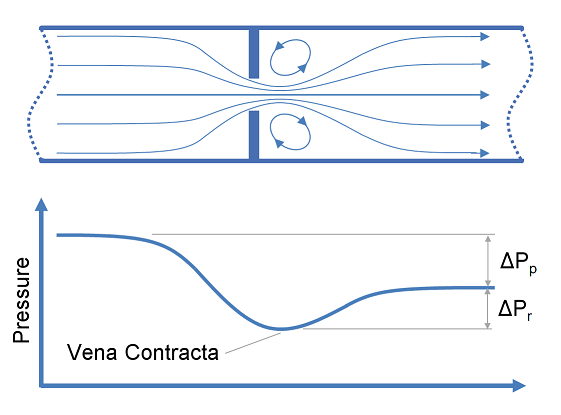
Restriction orifices and control valves are commonly used for pressure reduction and measurement of flow rates, however for a liquid system, excessive pressure drop across these items of equipment may result in cavitation. This article describes methods of predicting cavitation across restriction orifices and valves and proposes designs which may be used to avoid cavitation.
Definitions
| : | Cavitation Index (often σ) | |
| : | Upstream Pressure (absolute) | |
| : | Downstream Pressure (absolute) | |
| : | Fluid Vapour Pressure | |
| : | Permanent Pressure Loss | |
| : | Recoverable Pressure Loss |
Introduction
Cavitation occurs in liquid systems and is the result of rapid formation and collapse of vapour bubbles in the liquid. Cavitation must be avoided or controlled as the collapse of vapour bubbles releases significant energy at the location of the bubble collapse. The consequences of this energy release are typically loud noise and pitting damage to contact surfaces, which over time may result in significant damage to or failure of equipment such as pumps or valves.