Thermodynamics
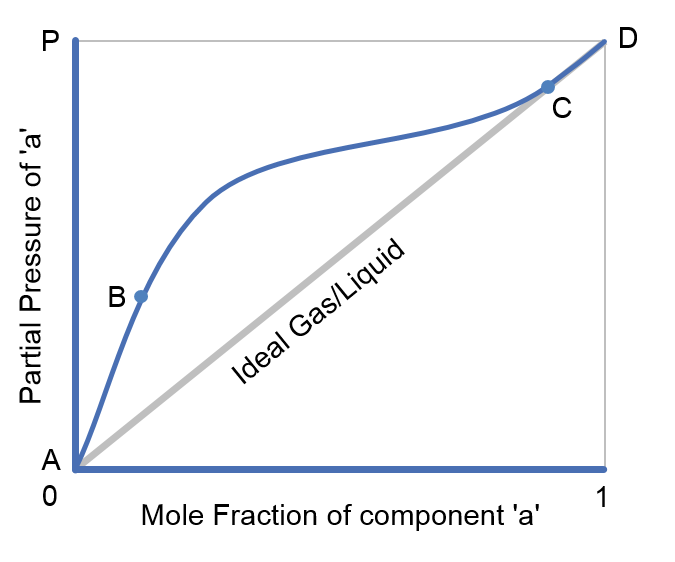
Relative volatility is a comparative measure of the vapour pressures of components in a liquid mixture. It is commonly used in the design of absorption and separation processes such as distillation as it allows the difficulty of separating components to be quickly assessed.

In the second episode of the Neutrium podcast, Trevor and Matt present the theory behind the Joule-Thomson effect and discuss the dangers and prevention of hydrate formation.
When examining thermodynamic processes some simplifying assumptions may be applied to help describe and analyse a given system. These simplifications can be viewed as ‘ideal’ thermodynamic processes and include adiabatic, isenthalpic, isentropic, isobaric, isochoric, isothermal, isentropic, polytropic and reversible processes. This article provides a brief overview of each process type and suitability to a given thermodynamic system.