Welcome to Neutrium
Neutrium is a knowledge base of engineering topics, centred mainly around chemical engineering design challenges faced by engineers in their daily work. We created Neutrium to bridge the gap between theory and practice. Feel free to ask a question, leave feedback or take a look at one of our in-depth articles.
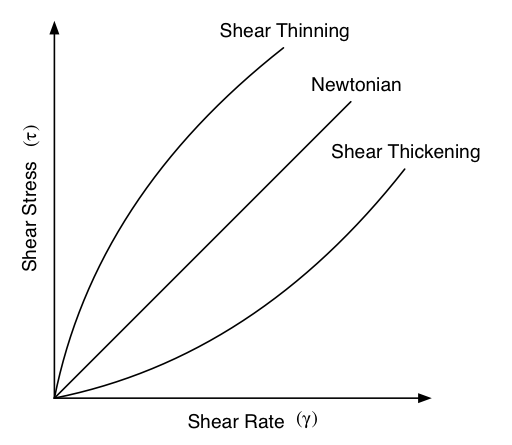
Viscosity is a measure of a fluids propensity to flow. There are two kinds of viscosity commonly reported, kinematic and dynamic. Dynamic viscosity is the relationship between the shear stress and the shear rate in a fluid. The Kinematic viscosity is the relationship between viscous and inertial forces in a fluid. Most common fluids are Newtonian fluids and their viscosity is constant with shear stress and shear rate. Non-Newtonian fluids are less common.
Fittings such as elbows, tees, valves and reducers represent a significant component of the pressure loss in most pipe systems. This article discusses the differences between several popular methods for determining the pressure loss through fittings. The methods discussed for fittings are: the equivalent length method, the K method (velocity head method or resistance coefficient method), the two-K method and the three-K method. In this article we also discuss method for calculating pressure loss through pipe size changes as well as control valves.

The pump affinity laws allow the prediction of centrifugal pump performance given changes to the speed of the pump or the diameter of impeller. This article presents the pump affinity laws for reference.
Power is consumed by a pump, fan or compressor in order to move and increase the pressure of a fluid. The power requirement of the pump depends on a number of factors including the pump and motor efficiency, the differential pressure and the fluid density, viscosity and flow rate. This article provides relationships to determine the required pump power.
Heat transfer coefficients characterise the transfer of thermal energy in terms of heat flow and temperature difference between two participating media. This article demonstrates how to calculate the radiative heat transfer coefficient and thermal resistance for gray, diffuse radiative exchange.
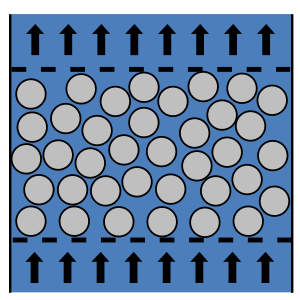
The packed bed Reynolds number is dimensionless and describes the ratio of inertial to viscous forces for fluid flow through a packed bed. It may be used to calculate the pressure drop though a packed bed via the Ergun equation or identify the boundaries of flow regimes (laminar, transitional and turbulent) in a packed bed. This article will show you how to calculate and interpret the packed bed Reynolds number.
The ideal gas law is used to relate volume, pressure and temperature for gases. The ideal gas law is an approximation and is generally more accurate at mild temperatures and pressures. The properties of gases increasingly deviate from ideal as conditions become more extreme, i.e. low temperature or high pressure. In these cases a compressibility factor may be used to correct for non-ideal behaviour when using the ideal gas relationship.
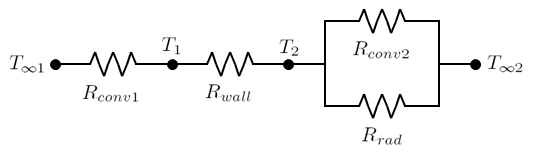
The concept of thermal resistance can be utilised to solve steady state heat transfer problems that involve series, parallel or combined series-parallel components. This article demonstrates how to calculate the total thermal resistance for such systems and how to calculate the thermal resistance for practical geometries such as a pipe wall.
The Prandtl number is a dimensionless number named after the German physicist Ludwig Prandtl. It represents the ratio of molecular diffusivity of momentum to the molecular diffusivity of heat.
Standard volumetric flow rates of a fluid are the equivalent of actual volumetric flow rates in the sense that they have an equal mass flow rate. This identity makes standard volumetric flow appropriate providing a common baseline for comparison of volumetric gas flow rate measurements at different conditions. This article outlines how to convert between standard and actual volumetric flow rates.

Absolute roughness is a measure of the surface roughness of a material which a fluid may flow over. Absolute roughness is important when calculating pressure drop particularly in the turbulent flow regime. This article provides some typical absolute roughness values for common conduit materials.
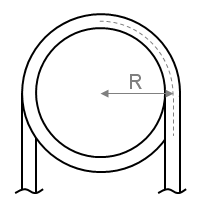
In order to determine the pressure drop in a pipe or coil the friction factor must first be calculated. This article presents the equations which may be used to determine the friction factor in coils and curved pipe.
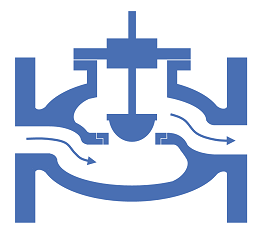
Cv and Kv are singles values in units of flowrate that may be used to characterise the relationship between flowrate and pressure loss for fittings and equipment. This article demonstrates how to calculate the Cv or Kv values, and how to use these values to determine the pressure loss for a given flowrate.
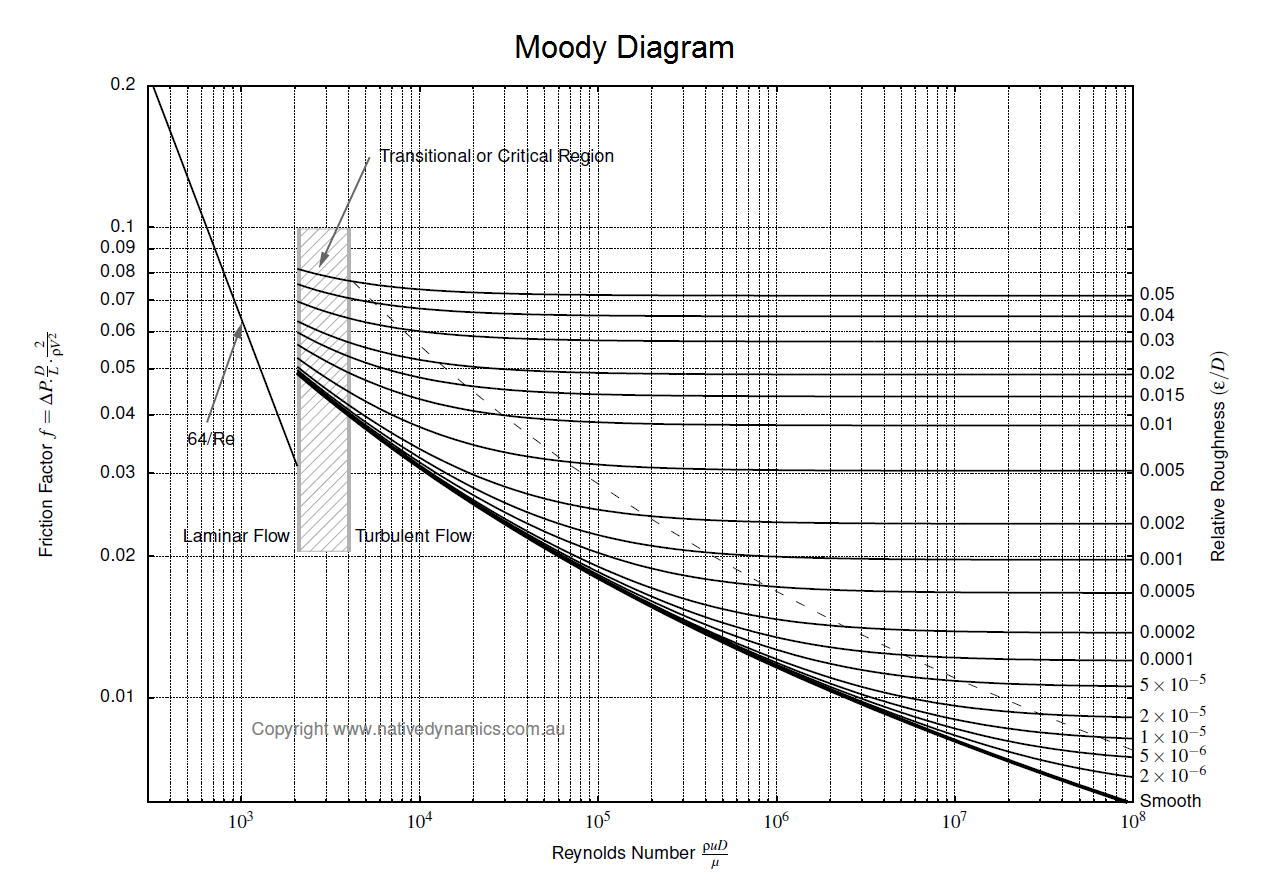
To determine the pressure loss or flow rate through pipe knowledge of the friction between the fluid and the pipe is required. This article describes how to incorporate friction into pressure loss or fluid flow calculations. It also outlines several methods for determining the Darcy friction factor for rough and smooth pipes in both the turbulent and laminar flow regime. Finally this article discusses which correlation for pressure loss in pipe is the most appropriate.
Cavitation is the formation and subsequent collapse of vapour bubbles in a flowing liquid and is often responsible for significant damage flow equipment such as pumps. This article will provide an overview of cavitation and provide insight into the identification and prevention of cavitation conditions through the calculation of Net Positive Suction Head (NPSH).
Thermal contact conductance is required to evaluate heat transfer through the interface of two materials and is dependent on a range of material and interface properties. This article provides a brief summary of these properties and a list of thermal contact conductance for a selection of metal-metal pairs.
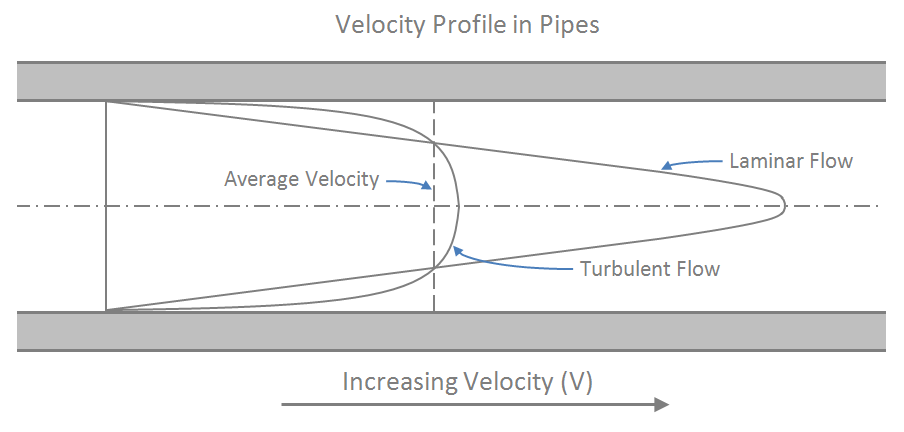
The Reynolds number is dimensionless and describes the ratio of inertial forces to viscous forces in a flowing fluid. It is used in many fluid flow correlations and is used to describe the boundaries of fluid flow regimes (laminar, transitional and turbulent). This article will show you how to calculate and interpret the Reynolds number.
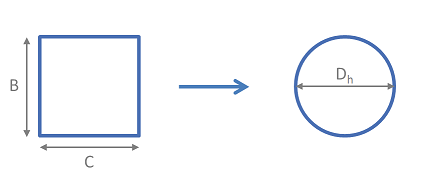
Hydraulic mean diameter provides a method by which non-circular pipe work and ducting may be treated as circular for the purpose of pressure drop and fluid flow rate calculations. This article provides the equations required to determine the hydraulic diameter for a range of non-circular geometries.